
The question everyone in the supplement aisle is asking
Walk down any supplement aisle and you will see the same choice repeated on every
shelf: tablets, capsules, gummies, powders, and a growing row of liquids. Each label
promises something. Liquids, in particular, often come with a bold claim that they are
absorbed far better than pills, sometimes with eye-catching percentages attached.
So what is actually true? Are liquid vitamins better than pills, or is it mostly marketing?
The honest answer is more useful than either extreme. Form matters, but not always in the
way the boldest claims suggest. A liquid can genuinely remove some obstacles between
you and your nutrients. It can also make the single most important factor in any
supplement routine much easier: actually taking it every day.
In this guide we will walk through how your body processes a pill versus a liquid, what the
research does and does not show, who tends to benefit most from a liquid multivitamin,
and how to judge any liquid formula before you buy it. By the end, you will be able to make
the choice with clear eyes rather than a label's say-so.
How your body absorbs a pill versus a liquid
Every nutrient you swallow has the same destination. Most vitamins and minerals are
absorbed through the lining of the small intestine and then carried through the
bloodstream to the cells that need them. The difference between forms is the work your
body has to do before that can happen.

The pill's journey
A tablet is a compressed blend of nutrients, binders, fillers and coatings. Before your
body can use what is inside, it has to:
1. Disintegrate. Stomach fluid and movement break the tablet into smaller pieces.
Liquid Vitamins vs. Pills: Which Does Your Body Actually Absorb Better?
2. Dissolve. Those pieces release individual nutrients into solution.
3. Absorb. Only dissolved nutrients can pass through the intestinal wall.
When everything works well, this happens without trouble. But each step is a place where
things can slow down. Hard-pressed tablets, heavy coatings, low stomach acid, fast
digestive transit, or certain medications can all reduce how much of a pill is released in
time to be absorbed.
The liquid's shortcut
A liquid supplement arrives already dissolved. There is nothing to disintegrate and no
coating to wear away, so nutrients are ready to move on to the absorption stage sooner.
That is the real, mechanical advantage of a liquid, and it is why liquids are often
recommended for people with digestive challenges.
It is important to be precise about what that advantage means. Skipping the break-down
steps can make nutrients available faster and more reliably. It does not mean a liquid
bypasses digestion entirely, and it does not guarantee that every nutrient will be
absorbed at a higher percentage. What happens after release still depends on the
specific nutrient, the form it comes in, what you eat it with, and your own body.
What the research actually says
You may have seen claims that liquid vitamins are absorbed at around 90 to 98 percent
while pills manage only 10 to 20 percent. Those figures circulate widely, but they are not
backed by solid published studies, and we would rather you hear that from us than
discover it later.
Here is a fair summary of where the evidence stands:
-
Liquids can be absorbed faster. Because there is no disintegration step, nutrients in
solution tend to reach the intestine ready to absorb. For some nutrients, studies show
quicker uptake from liquid forms, even when total absorption over a full day ends up
similar.
-
Total absorption depends heavily on the nutrient. Some nutrients are absorbed very
efficiently from almost any form. Others are sensitive to the chemical form used, such
as magnesium citrate versus magnesium oxide, far more than whether they arrive as a
liquid or a tablet.
-
Pill quality varies widely. Not every tablet breaks down well. Poorly made tablets can
pass through the digestive tract partly intact, which is one reason quality standards
for dissolution exist.
-
Food and fat matter. Fat-soluble vitamins (A, D, E and K) are absorbed best alongside
some dietary fat, regardless of form.
-
More research is needed. Head-to-head studies comparing complete liquid
multivitamins with complete tablet multivitamins are limited. Most comparisons look
at single nutrients.
The takeaway: liquid form is a real advantage for getting nutrients dissolved and available,
especially for people whose digestion is less than perfect. But the overall formula, the
nutrient forms chosen, and your consistency matter at least as much as the format alone.
That is why the next section may be the most important one in this article.
Where liquid vitamins genuinely shine
Absorption debates aside, there are several situations where a liquid supplement has
clear, practical advantages.
1. People who struggle to swallow pills
Difficulty swallowing pills is far more common than most people assume. Older adults,
children, people recovering from illness, and anyone with a strong gag reflex often skip
supplements simply because taking them is unpleasant. A liquid removes that barrier
entirely. One long-time Trévo customer put it simply: the liquid form is perfect because
she cannot swallow pills at all.
2. Sensitive or compromised digestion
If your stomach produces less acid, which becomes more common with age and with
certain medications, breaking down tablets gets harder. Liquids are already in solution, so
they place less demand on that first stage of digestion.
3. Consistency, the factor that matters most
No supplement can help if it stays in the cabinet. Research on supplement and medication
habits consistently finds that complicated routines, many separate pills, and unpleasant
experiences lead people to skip doses. A single daily liquid replaces a handful of bottles with one small step you can tie to your morning coffee or breakfast. That simplicity is
often what turns good intentions into a habit that actually lasts.
4. Flexible dosing for the whole family
With a liquid, dose is measured rather than fixed. Adults can take a full serving, active
days can call for a little more, and children can take an age-appropriate amount. One
bottle can serve an entire household.

5. Room for more ingredients
A tablet can only hold so much before it becomes too large to swallow, which is why many
multivitamins require two to six pills a day. A liquid can combine vitamins, minerals, plant
extracts and other ingredients in a single serving without that size limit.
How to choose a good liquid multivitamin
Not all liquids are created equal. Use this checklist before you buy any liquid supplement,
ours included.
-
Breadth of the formula. Does it go beyond a basic handful of vitamins? Look for trace
minerals, antioxidants, plant-based nutrients and supporting ingredients such as
digestive enzymes. -
Sweeteners and fillers. Many liquids rely on added sugar, corn syrup or artificial
sweeteners to cover the taste of minerals. Fruit-juice sweetening is a gentler option. -
Water-soluble design. Water-soluble ingredients are less likely to build up in the body
than high doses of fat-soluble vitamins. -
Serving size you will actually take. One or two ounces a day is easy to stick with. A
formula that asks for several measured doses throughout the day is harder to sustain. - Taste. It sounds minor, but a supplement you dislike is a supplement you will skip.
-
Transparency. The full ingredient list and nutrition facts should be easy to find on the
label and the website. -
Value per serving. Compare cost per day, not just bottle price, and factor in how many
separate supplements it replaces.
Tips for getting the most from any liquid
-
Shake well so minerals and plant ingredients are evenly mixed.
-
Take it at the same time each day, ideally with a meal so fat-soluble nutrients have
dietary fat to absorb alongside.
-
Refrigerate after opening if the label recommends it, to protect freshness and flavor.
-
Pair it with real food. A supplement is meant to fill gaps, not replace a varied diet of
vegetables, fruit, whole grains and protein.
Where Trévo fits
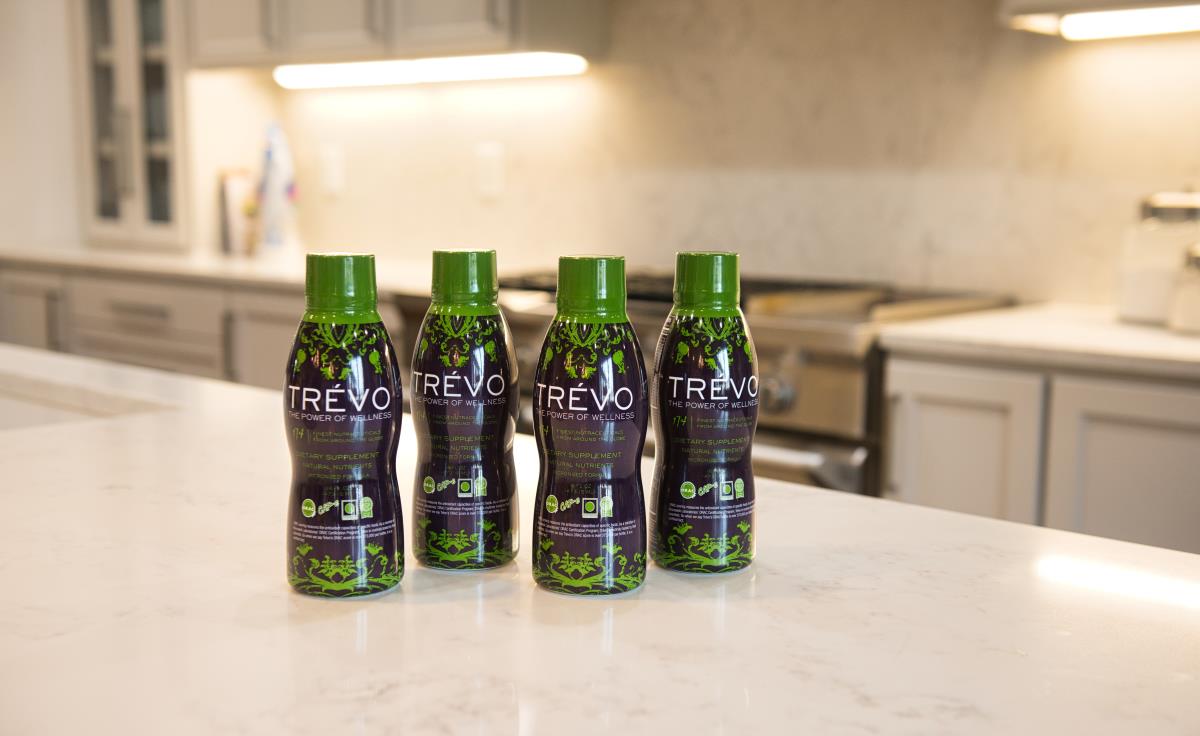
Trévo was built around the advantages above. It is an all-in-one liquid supplement that
combines 174 ingredients, including vitamins, minerals, trace minerals, antioxidants, fruits
and vegetables, supergreens, amino acids, digestive enzymes and a blend of mushrooms
such as Lion's Mane, Cordyceps and Reishi, in a single 1 to 2 ounce daily serving.
It is 100% vegetarian, sweetened with fruit juices, and made with water-soluble
ingredients. Our founder, Mark A. Stevens, even brought his daughter along to taste
testing so the flavor would work for kids as well as adults. The routine is as simple as it
gets: shake, pour into the cap, and drink.
If you have been juggling a cabinet full of bottles, or skipping supplements because pills
are a chore, Trévo is designed to make daily nutrition one easy step. Want to go deeper on
absorption? Read our article on how fulvic acid supports nutrient absorption.
Frequently asked questions
Are liquid vitamins better than pills? Liquids skip the break-down steps that tablets
require, so their nutrients are dissolved and ready to absorb. That is a real advantage,
especially for people with sensitive digestion or trouble swallowing. Total absorption still
depends on the nutrient and the formula, so choose a well-made product either way.
Is it true liquid vitamins are 90% absorbed? That figure is widely repeated but is not
supported by strong published research. Liquids may be absorbed faster, but exact
percentages vary by nutrient and person.
When is the best time to take a liquid multivitamin? Most people do best taking it at the
same time daily with a meal. Morning works well for many because it fits naturally into an
existing routine.
Can children take liquid vitamins? Many liquid formulas, Trévo included, are designed for
the whole family with age-appropriate serving sizes. Check with your pediatrician about
the right amount for your child.
Do I still need to eat well if I take a liquid multivitamin? Yes. A supplement helps fill
nutritional gaps, but it works best alongside a varied, whole-food diet.
These statements have not been evaluated by the Food and Drug Administration. This
product is not intended to diagnose, treat, cure, or prevent any disease. Consult your
healthcare provider before starting any supplement, especially if you are pregnant,
nursing, taking medication, or managing a medical condition.
Sources